Natural gas compared to other fuels
Powering modern energy systems
Natural gas is a cornerstone of modern energy systems, but how does it stack up against other major fuels? Understanding these differences helps governments, utilities, and industries make smarter energy decisions. Below we will dive into how natural gas compares to three other energy fuel types: diesel, HFO (heavy fuel oil) and renewable energy.
Natural gas vs. diesel
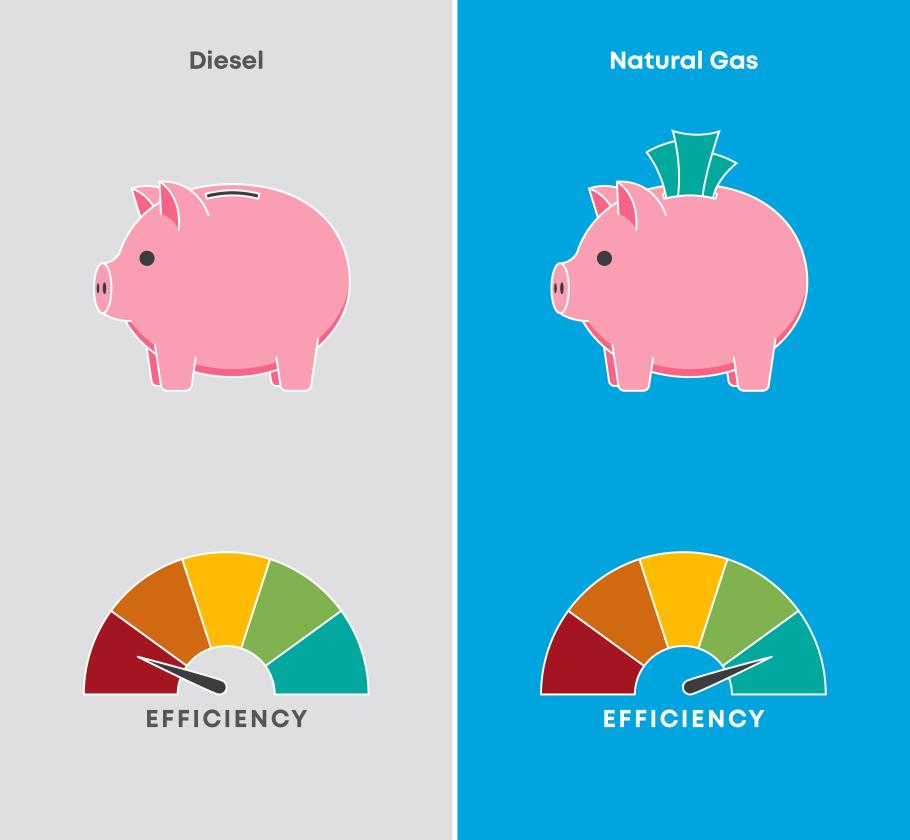
Diesel, traditionally, has been the dominant fuel for global transportation, backup power generation, and remote or off-grid applications, but natural gas is increasingly favored for stationary energy use. Natural gas results in fewer carbon dioxide emissions per unit of energy and significantly fewer air pollutants, making it a cleaner and lower-emission alternative.
From an operational standpoint, natural gas systems, particularly in power generation, offer greater efficiency and flexibility than diesel-based alternatives. Natural gas power plants can adjust quickly to respond to changes in electricity demand, while diesel generators are typically less efficient for continuous, large-scale operation. In regions with established pipeline infrastructure, switching from diesel to natural gas can reduce fuel costs, lower emissions, and improve overall energy efficiency, especially for industrial facilities and power generation.
Natural gas vs. heavy fuel oil
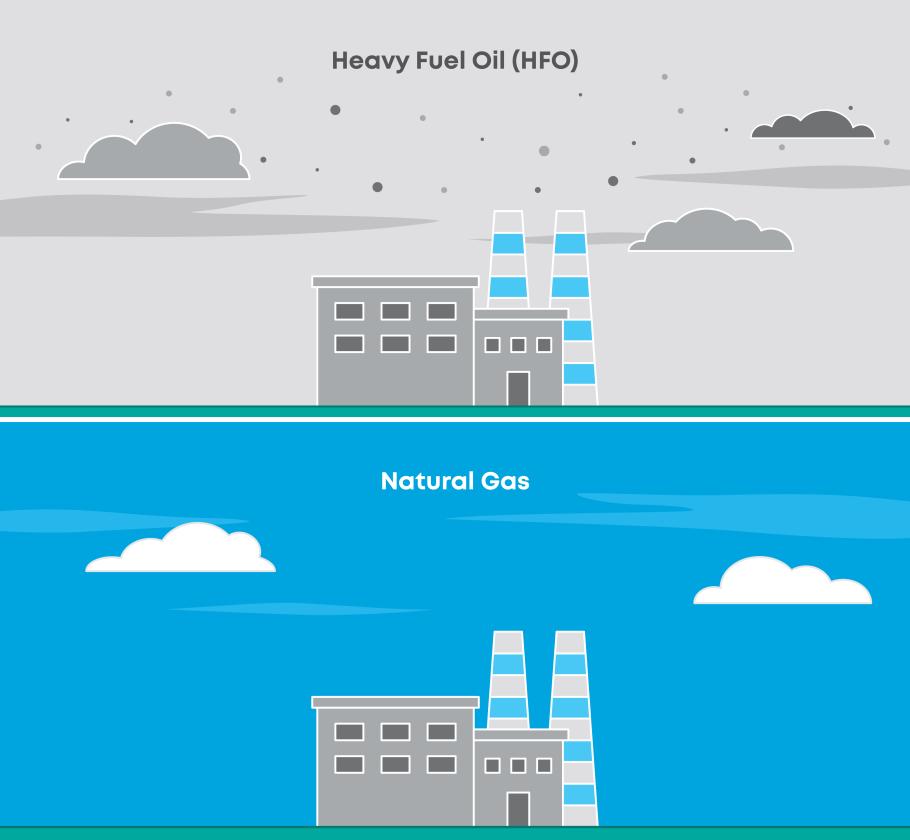
Heavy fuel oil (HFO) has historically been used in large-scale industrial boilers, power plants, and marine engines due to its low cost and high energy density. However, HFO is one of the most carbon-intensive and polluting fossil fuels. Its combustion releases higher levels of carbon dioxide, sulfur oxides, particulate matter, and other harmful emissions compared to natural gas.
Natural gas offers a substantially cleaner alternative. It contains little to no sulfur and burns more completely, resulting in lower emissions and reduced need for complex emissions control systems.
Natural gas vs. renewable energy
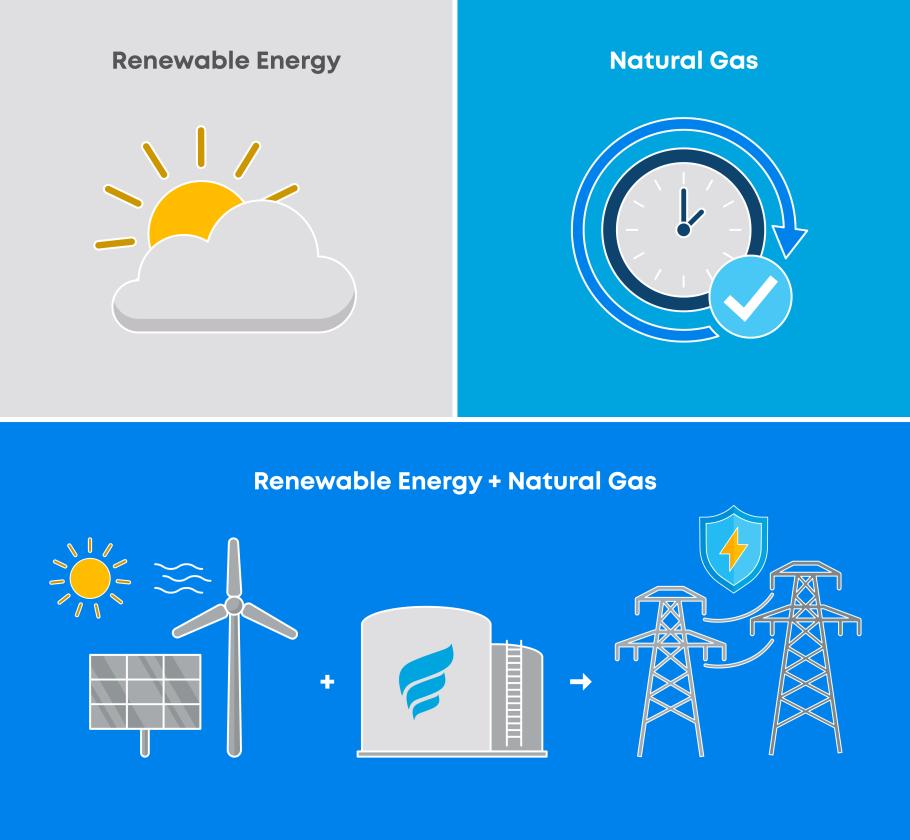
Renewable energy sources are growing rapidly and play a critical role in reducing emissions. However, their output depends on environmental conditions, like sunlight and wind availability, making it unreliable as a single energy source.
However, when paired with natural gas, renewable energy can provide reliable, dispatched power when renewable generation is not available. Gas-fired power plants can respond quickly to changes in electricity demand or renewable output, helping to more consistently maintain grid stability.
As energy systems evolve, fuel comparisons are becoming less about choosing one source over another and more about integration. Natural gas continues to support energy transitions by working alongside renewables, supporting grid reliability, and meeting growing global energy demand.
To learn more about how natural gas powers the world with positivity, explore the broader advantages of using natural gas and how it supports economic development, energy access, and reliability worldwide.