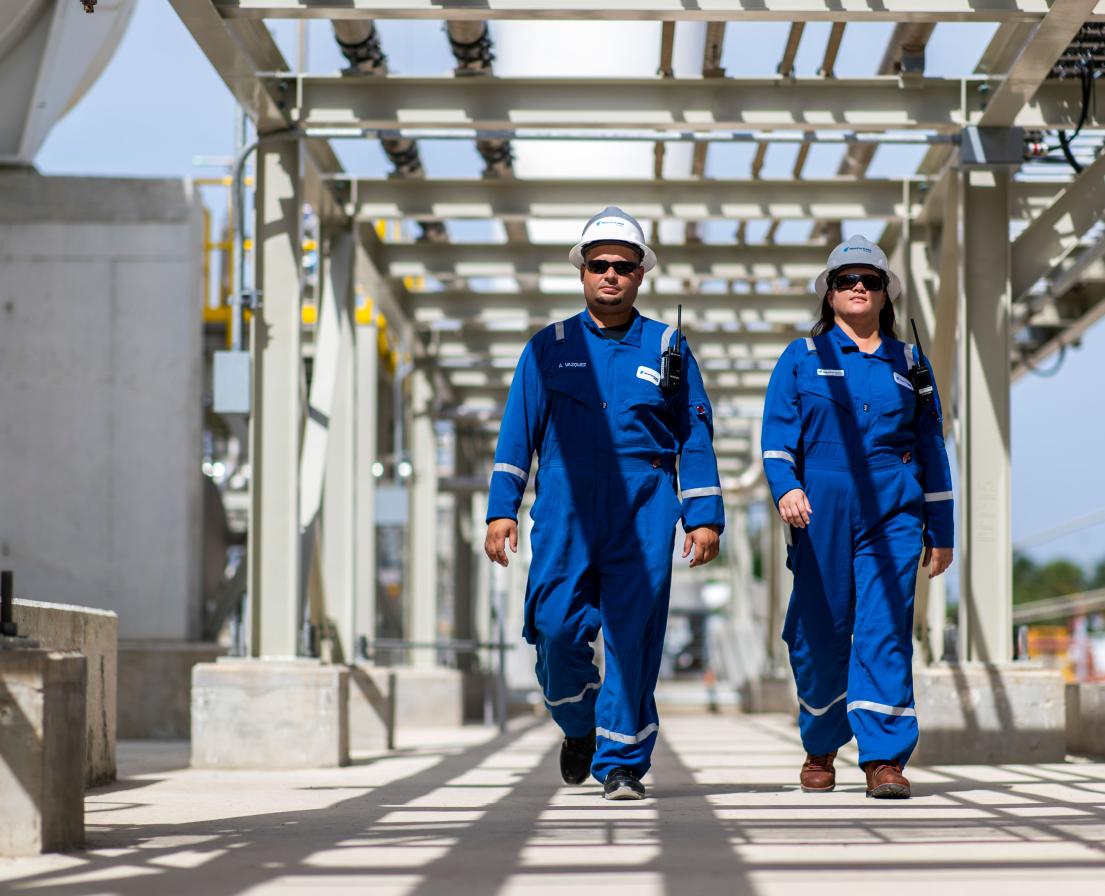
Two paths with one purpose: how an LNG project comes to life
Delivering reliable energy
Every community has unique energy needs. Some require rapid access to cleaner, more reliable fuel sources with minimal existing infrastructure. Others need large-scale, long-term energy systems capable of supporting industrial growth, grid stability, and economic development.
At New Fortress Energy, we design solutions around those needs. Whether a project is developed onshore, offshore, or through a combination of both, our goal remains the same: delivering reliable, affordable energy where it is needed most.
Our integrated approach combines LNG supply, terminal infrastructure, logistics, and power generation into a single solution, allowing us to accelerate development timelines and bring energy to market efficiently.
Building energy infrastructure onshore
Every project starts with understanding the needs of the local community and the environment where the facility will operate.
The process begins with site selection and engineering studies. Our teams evaluate environmental conditions, marine access, storage requirements, regasification capacity, and connections to customers or power plants. Throughout this phase, we work closely with local governments, regulators, and other stakeholders to develop the right solution for each market.
Once the design is finalized, detailed engineering begins. Equipment is manufactured and sourced from around the world, while project teams coordinate every aspect of the facility before construction starts.
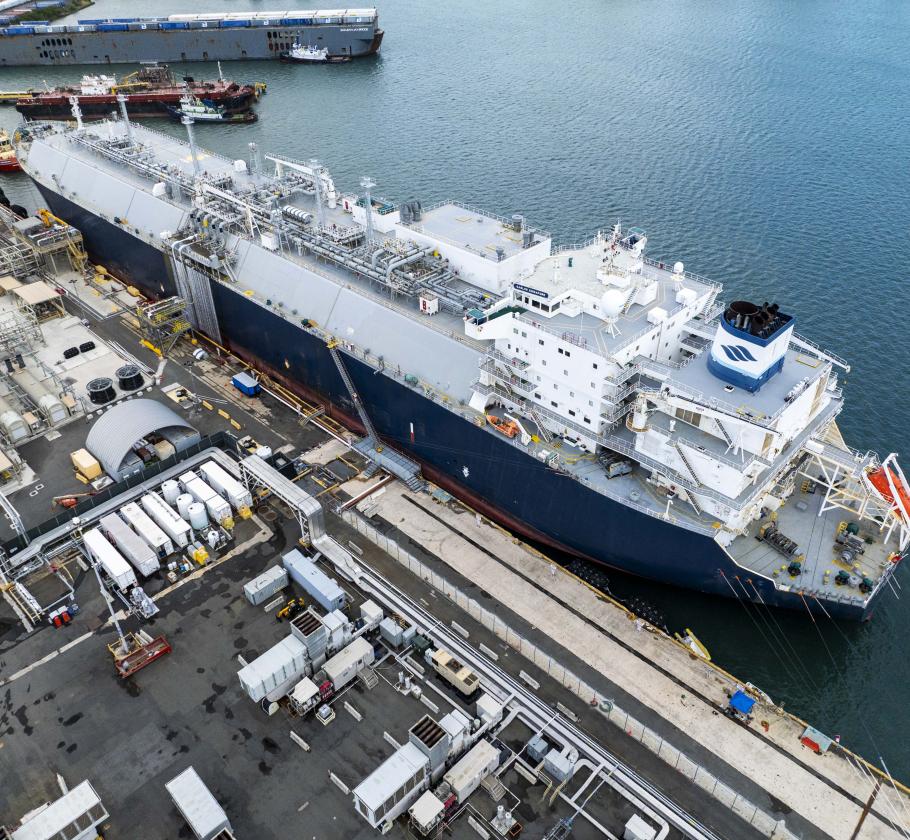
Construction is the largest phase of development. Marine infrastructure, storage tanks, piping, electrical systems, and process equipment are installed to create a fully operational terminal. At peak activity, projects can support hundreds of workers, creating jobs and economic opportunities in the surrounding community.
The final phase is commissioning. After construction is complete, the terminal is connected to downstream infrastructure such as industrial facilities or power plants. Extensive testing is performed to ensure every system operates safely and reliably before the facility receives its first LNG cargo.
Once LNG is introduced into the system, operators gradually bring the terminal online and monitor performance as it transitions into commercial operation. This milestone, known as "first gas," marks the delivery of a fully integrated energy solution.
Creating energy infrastructure offshore
Offshore LNG infrastructure provides an efficient way to deliver natural gas to regions where traditional onshore development may be limited.
Like onshore projects, development begins with site selection, engineering studies, environmental assessments, and stakeholder engagement. From there, the project is designed to meet the specific needs of the market.
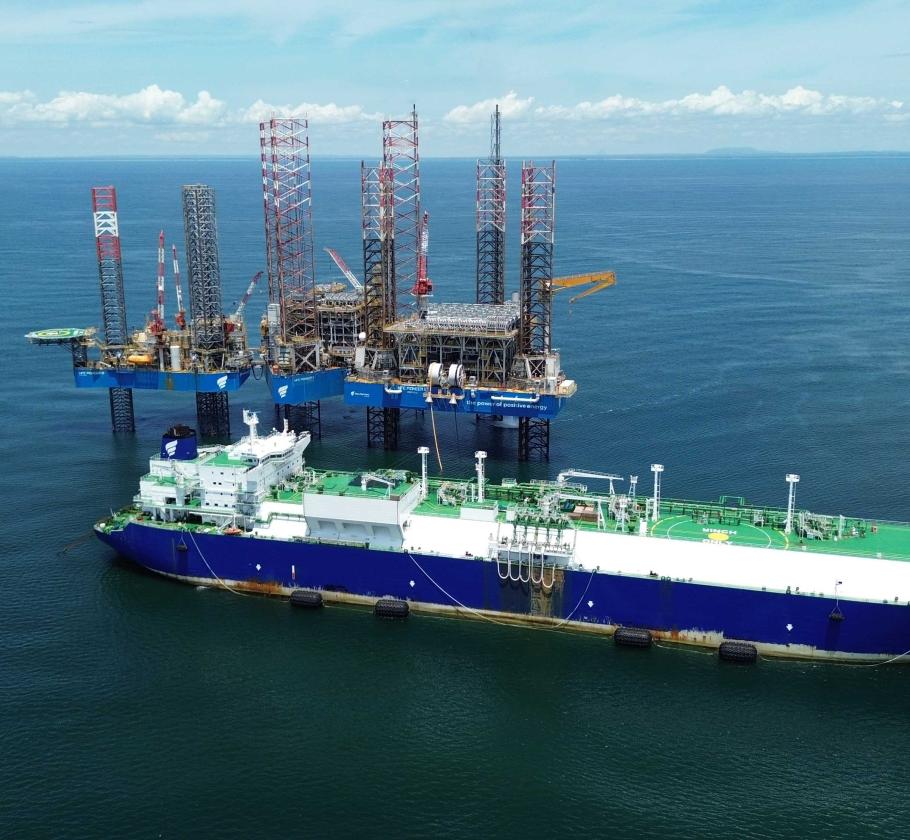
Many offshore terminals are built around a Floating Storage and Regasification Unit (FSRU), supported by mooring systems, subsea pipelines, and other marine infrastructure. NFE has also developed innovative offshore solutions such as FLNG 1, where major facility components are built onshore and integrated offshore to create a complete floating LNG production facility.
Construction often takes place both onshore and offshore. Marine infrastructure is installed, pipelines are laid, and vessels are prepared for long-term operations. Once these components are in place, the terminal is connected into a larger energy network that links LNG supply with downstream customers.
The final step is commissioning. Engineers test each system to ensure the facility can safely receive, store, regasify, and deliver natural gas.
When the first LNG cargo arrives, the project transitions from construction to operations. LNG is transferred into storage, converted back into natural gas, and delivered to shore through subsea pipelines, where it can fuel power plants, industrial facilities, businesses, and communities.
Whether onshore or offshore, every project is designed with the same goal: delivering reliable energy that supports economic growth, strengthens energy security, and expands access to cleaner fuel.