How is LNG produced:
a step-by-step look at the process
From the Earth
to your home
Liquefied natural gas (LNG) plays a growing role in global energy systems by enabling natural gas to be transported efficiently to markets around the world. While many discussions focus on what LNG is, this guide takes a closer look at how LNG is produced, examining the industrial process that transforms natural gas into a liquid suitable for storage and shipping.
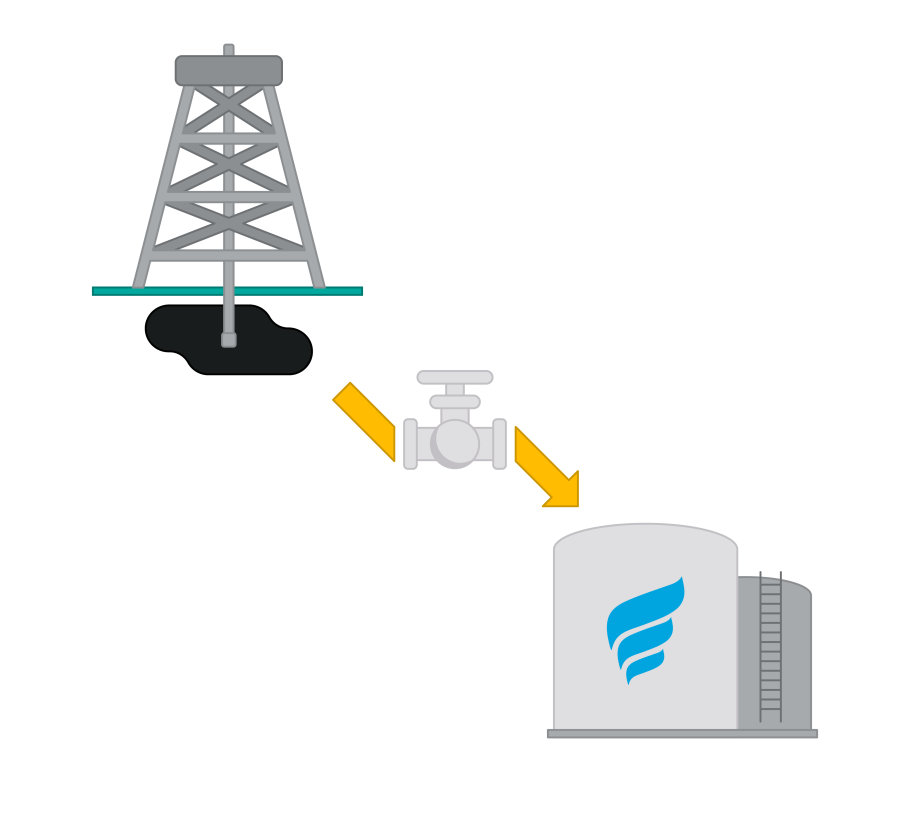
The LNG production process begins with natural gas extracted from underground reservoirs, which can be located onshore or offshore. These reservoirs are accessed through drilled wells that bring natural gas to the surface. Once produced, the gas is transported to a liquefaction facility where it undergoes a series of treatments and purifications before the cooling process.
The second step consists of cleaning the natural gas, removing impurities like water, carbon dioxide, sulfur compounds and heavy hydrocarbons. Removing these components prevents freezing and corrosion.
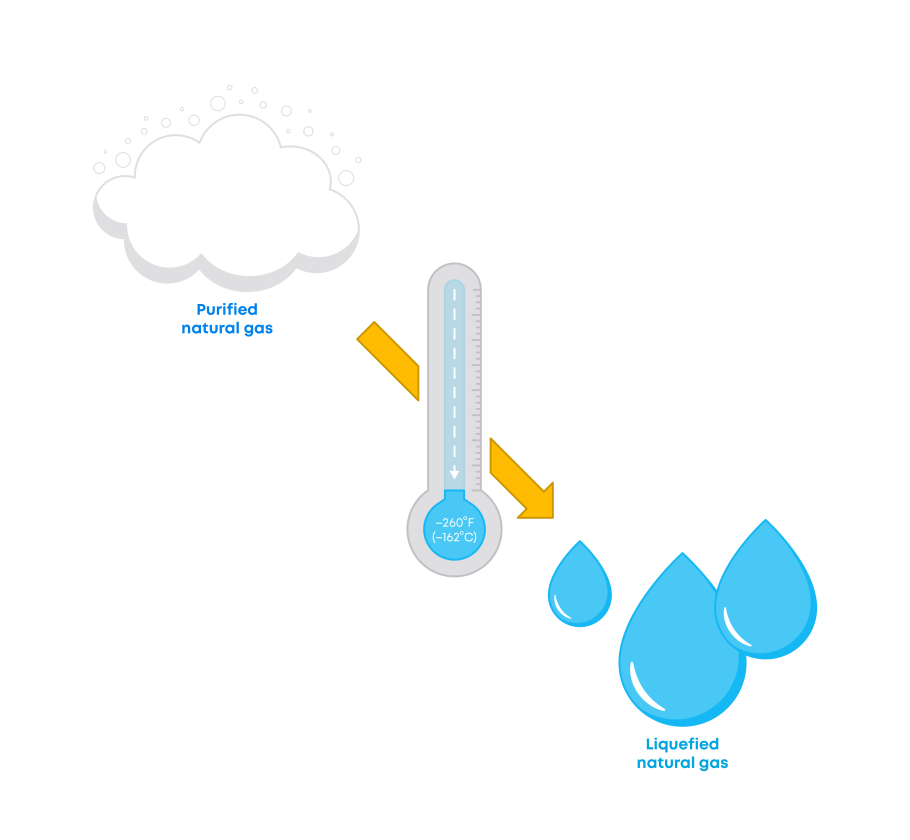
In the third step, purified natural gas is cooled and converted into liquefied natural gas, or LNG. The gas is gradually cooled to approximately –260°F (–162°C), allowing it to condense into a liquid. This stage relies on advanced LNG liquefaction technology, which uses controlled refrigeration cycles to manage temperature and pressure throughout the process.
After liquefaction, LNG is stored and prepared for transport. It can be held in insulated onshore tanks, ISO containers, or floating storage units (FSUs). ISO containers are designed to maintain cryogenic temperatures and are well suited for smaller-scale storage and land-based transportation. For larger volumes of LNG storage and marine distribution, FSUs provide an efficient solution, with the capacity to store volumes equivalent to approximately 4,000 ISO containers.
We apply this LNG production and supply process at scale to help deliver reliable energy to communities around the world. Through our integrated portfolio of liquefaction facilities, storage solutions, and global logistics infrastructure, we supply LNG to markets that need flexible, dependable power. By expanding access to natural gas and supporting modern energy systems, we continue to power the world with positive energy.